
Why RAAC Is Considered a Dangerous Material in Buildings
posted 16th February 2026
In recent years, Reinforced Autoclaved Aerated Concrete (RAAC) has become a major concern across the UK construction and property sectors. Many owners of schools, hospitals, offices, and residential buildings are now being asked to confirm whether RAAC is present—and, if so, what condition it is in.
This article explains what RAAC is, why it is considered a dangerous material in buildings, and what property owners should do if they suspect it may be present.
What is RAAC?
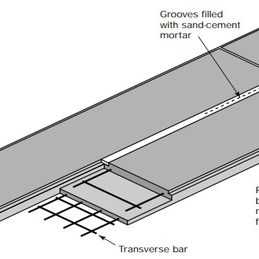
Reinforced Autoclaved Aerated Concrete (RAAC) is a lightweight precast concrete product that was widely used in the UK between the 1950s and the mid-1990s.
It was popular because it was:
• Lightweight
• Quick to install
• Cost-effective
• Suitable for flat roofs and floors
RAAC panels were commonly used in:
• Schools
• Hospitals
• Public buildings
• Residential blocks
• Commercial premises
However, what was once seen as an efficient building material is now recognised as having significant structural limitations.
Why is RAAC considered dangerous?
1) Limited structural strength
Unlike traditional reinforced concrete, RAAC is:
• Much more porous
• Significantly weaker in compression
• Less robust under load
Over time, this can lead to:
• Excessive deflection
• Cracking
• Loss of structural capacity
2) Shorter design life
Many RAAC elements were originally designed with a service life of around 30 years.
In reality:
• Many buildings containing RAAC are now 40–70 years old.
• The material may be well beyond its intended lifespan.
This increases the risk of:
• Progressive deterioration
• Unexpected structural failure
3) Sudden and brittle failure
One of the most serious concerns with RAAC is that it can:
• Fail without significant warning
• Collapse in a brittle, sudden manner
This differs from traditional concrete, which often shows:
• Visible cracking
• Progressive deterioration
• Warning signs before failure
4) Vulnerability to moisture
RAAC is highly porous and can absorb water easily. If moisture enters the material:
• The reinforcement inside the panel can corrode.
• The bond between the steel and the concrete can be lost.
• Structural capacity can reduce significantly.
Common causes include:
• Roof leaks
• Poor drainage
• Failed waterproofing
• Condensation
5) Inadequate bearings and poor historic detailing
Many RAAC planks were installed with:
• Minimal end bearings
• Inconsistent support details
• Little redundancy in the structure
Over time, this can lead to:
• End failures
• Slippage
• Localised collapse
Where is RAAC most commonly found?
RAAC is most frequently located in:
• Flat roof structures
• School classrooms and corridors
• Plant rooms
• Ceiling voids
• Some floor systems
Because it is often hidden above ceilings or within roof zones, it may not be visible during normal occupation.
Why inspections are now essential
Recent guidance from government and industry bodies has highlighted the need for:
• Targeted RAAC surveys
• Structural risk assessments
• Ongoing monitoring or replacement
If RAAC is present and in poor condition, buildings may require:
• Immediate propping
• Restricted access
• Structural strengthening
• Full replacement of affected elements
Our RAAC inspection services
We have recently been instructed to inspect a school in London to determine whether RAAC is present within the structure.
This is a service we provide to:
• Schools and academies
• Managing agents
• Commercial landlords
• Housing associations
• Private property owners
Our approach typically involves:
1. Stage 1: Visual inspection and records review
2. Stage 2: Targeted opening-up and structural assessment (if required)
We provide:
• Clear, concise reports
• Practical risk assessments
• Cost-effective solutions
• Competitive fee proposals
Do you need a RAAC survey?
If your building:
• Was constructed between 1950 and 1995, and
• Has flat roofs or precast concrete elements,
it may be worth carrying out a professional inspection.
Early identification:
• Reduces risk
• Helps with budgeting and planning
• Avoids emergency closures or costly reactive works
Get in touch
If you would like advice or a quotation for a RAAC inspection, please contact us. We offer competitive rates and a straightforward, two-stage survey process tailored to your building.